
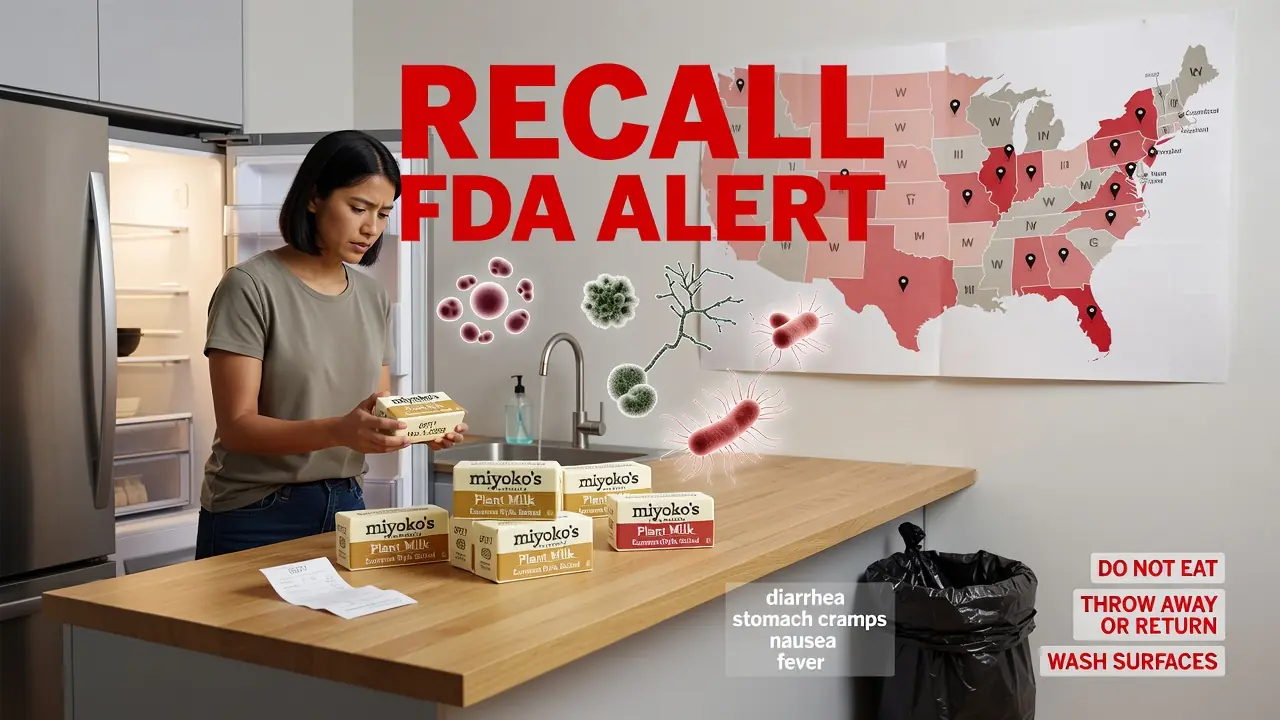
The U.S. Food and Drug Administration has announced a recall of Miyoko's Creamery European Style Salted Plant Milk Butter because the product may be contaminated with yeast, mold and E. coli. More than 1,300 cases were recalled across ten states, including Connecticut, Florida, Georgia, Iowa, Illinois, Indiana, Maryland, New Jersey, New Hampshire and Wisconsin. Shoppers who bought the butter should check their refrigerators now.
Which Products Are Affected
The recall covers butter bearing lot code 07871 and a best-by date of Nov. 5, 2026. Anyone who has packages matching both the lot code and the date should stop using them. The FDA-linked notice does not describe other lot codes or dates as part of this action, so households holding different lots should compare their packaging carefully against the published details rather than assume the recall covers everything under the brand name.
What the Contaminants Mean for Households
Yeast and mold are common spoilage organisms that can grow in dairy alternatives, sometimes producing off odors, discoloration or fuzzy growth. E. coli is a different concern. Some strains cause serious gastrointestinal illness, and bacterial contamination is not always visible or detectable by smell. Because the presence of E. coli can be hidden in a product that looks normal, the safest course is to avoid eating the butter rather than inspecting it and deciding it seems fine.
Symptoms of foodborne illness from contaminated products can include diarrhea, stomach cramps, nausea and fever. Anyone who has eaten the recalled butter and feels unwell should contact a healthcare provider, and should mention the recall so the clinician can consider the possibility of a foodborne cause.
What Consumers Should Do Next
If you have the butter, do not eat it. Throw it away in a sealed bag, or return it to the store where it was purchased. Wash the refrigerator shelf or drawer where it was kept, and wash your hands after handling the package. The recall notice did not provide information about refunds, so contact the retailer or the company directly to ask about reimbursement. Keep your receipt if you have one, since many stores accept returns of recalled goods even without the original packaging.
Recall notices can be updated as investigators learn more, so it is worth checking the FDA's recall listings for any changes to affected lots or distribution areas.