
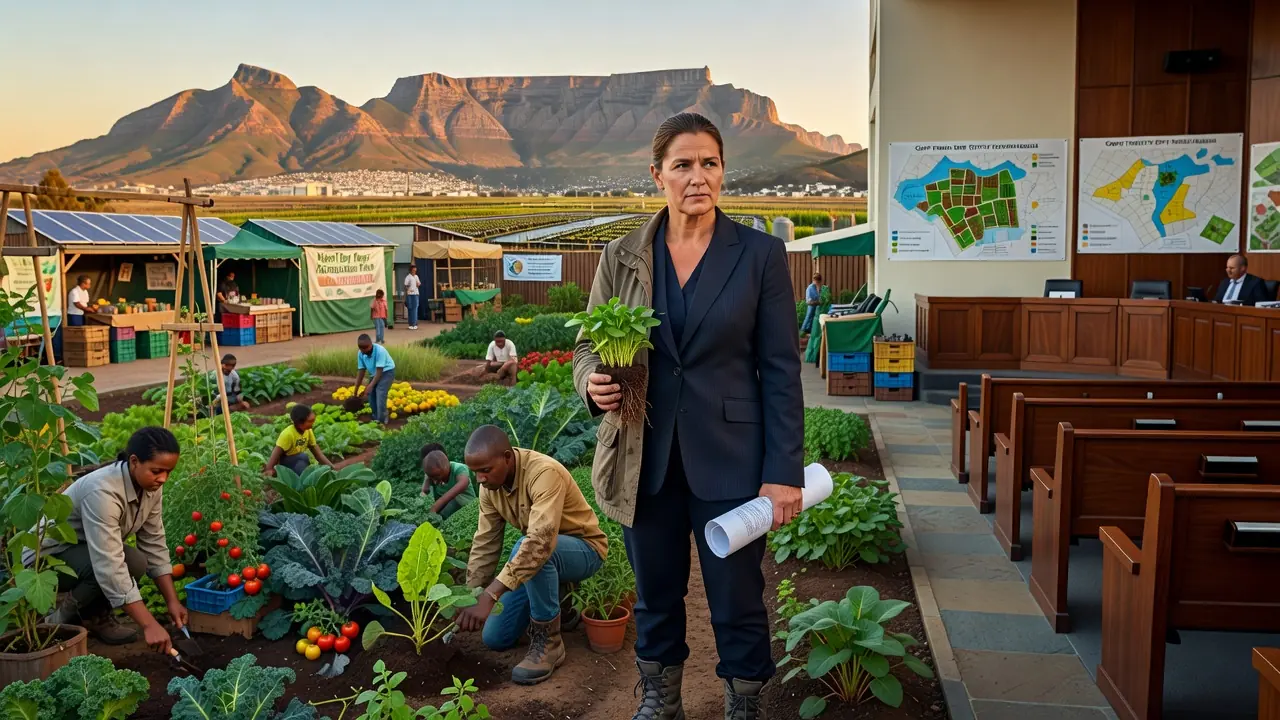
Danielle Klaff, an environmental educator and DA member, is standing on her party's proportional representation list for Cape Town's upcoming municipal elections. She says her years of community work on food security and green spaces would shape her approach if she wins a seat. Her candidacy shows how grassroots environmental experience can move into formal local government.
From Gardens to the Council Chamber
Klaff's path into politics was built over several decades of hands-on work. After studying art at the University of Cape Town's Michaelis School of Fine Art, she spent years in the Garden Route living sustainably and teaching art and gardening. She later returned to Cape Town, settled in Hout Bay, and became chairperson of Envirochild, an environmental education nongovernmental organisation. Her work there included setting up environmental clubs at local schools and running the Hout Bay Green Fair, which operated as a zero-waste event powered by renewable energy.
During the COVID-19 pandemic, she raised money from friends abroad to support vulnerable residents in Hout Bay and helped distribute food through community organisations. Klaff says that experience convinced her that food relief alone is not enough. She began establishing vegetable gardens in township communities, aiming to help residents grow food for themselves.
Why Proportional Representation Matters
Klaff is seeking election through the PR system, which allocates council seats according to each party's share of the vote. Unlike ward councillors, who represent specific geographic areas, PR councillors are drawn from party lists. This means a candidate can work on citywide issues rather than the concerns of a single ward, though voters have less direct local ties to any one PR representative.
Klaff has previously served two terms as the environmental representative on the Hout Bay ward committee, where she represented local environmental groups and liaised with the City of Cape Town. Supporters within the DA, including councillor Errol Anstey and parliamentarian Michael Bagraim, have praised her commitment to public service, though their comments reflect party endorsement rather than independent assessment.
Priorities and Practical Limits
If elected, Klaff says she would focus on water security, food security and the protection of trees and green spaces as Cape Town grows. She has attended meetings on water resilience and wants to address infrastructure challenges. She also proposes township vegetable gardens and better access to nutritious produce for early childhood development centres, and she supports reducing pesticide use in public spaces.
Klaff acknowledges that residents raise many other concerns, including municipal rates, water outages, traffic congestion and baboon management. She says clearer communication about why infrastructure work causes temporary disruptions could help residents understand and accept those disruptions.
Her proposals are her own stated priorities rather than adopted city policy, and their feasibility will depend on budgets, council votes and the city's broader service obligations. Voters will be able to judge her record only as it develops after the election.